
Published August 1, 2026
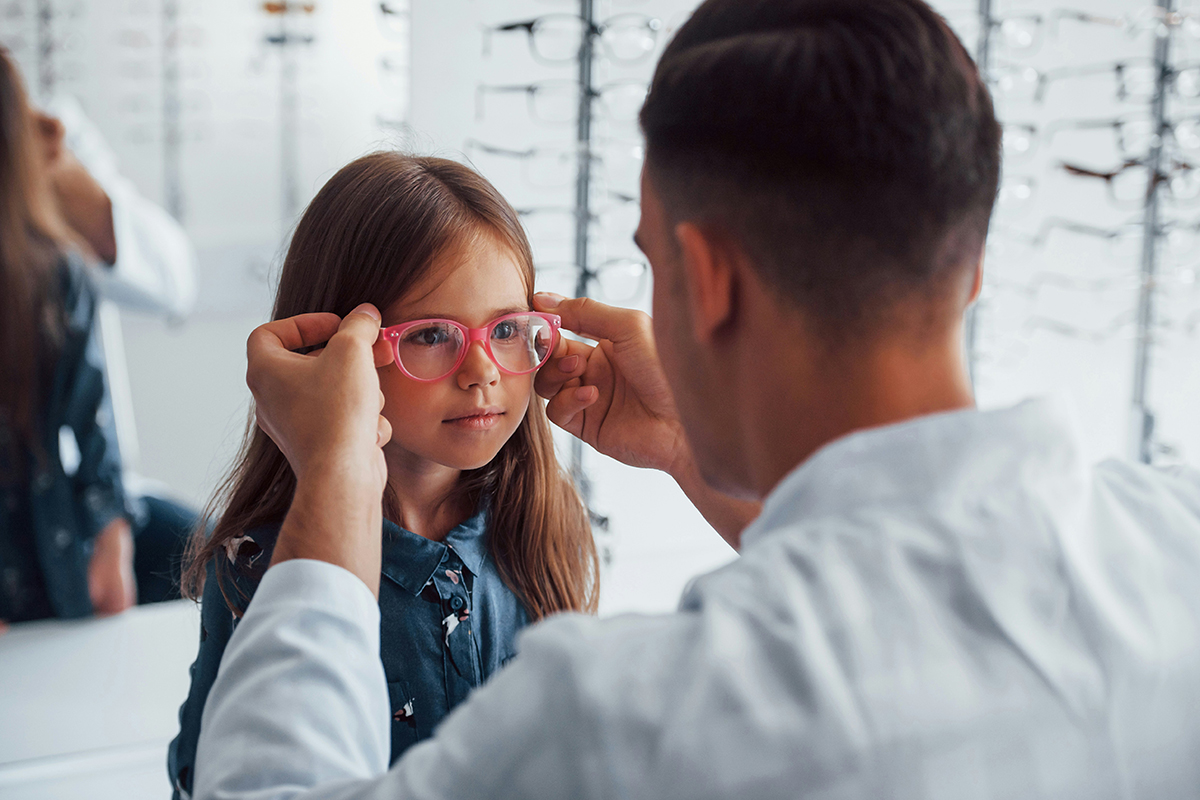
This August is National Eye Exam Month, and it’s not just for adults! The CDC states that vision impairment is one of the most common disabling conditions for children, but fortunately, catching vision problems early on can help avoid or minimize any potential damage before they get any worse. Read on to learn more about why protecting your child’s eye health is so important, as well as how to know when to schedule an eye exam and how to prepare for it.
The Importance of Children’s Eye Health
As your kids grow up, their bodies go through a lot of changes. Each year, their bones get longer, their muscles start to form, and their vision also evolves. One year, they might have perfect vision, only for them to mention the next year that things in the distance seem a little blurry. In fact, roughly 1 in 4 children in the United States have a vision issue that can be diagnosed and treated. And since vision plays a pivotal role in your child’s development and learning—with roughly 80% of what they learn in school being visual and their visual function strongly influencing how well they’ll perform academically—it’s important to schedule annual eye check-ups with your child’s pediatrician to make sure any potential vision issues are identified early on.
The most common vision issue that appears for children is a form of refractive error, where light doesn’t focus correctly on the retina and causes blurry vision. Astigmatism, myopia (nearsightedness), and hyperopia (farsightedness) are all types of refractive errors, which can all typically be corrected with glasses, or contact lenses for teenagers.
Doctors also look for less common vision issues in children during annual vision check-ups. Strabismus (misalignment of the eyes) is where one eye either turns in and becomes crossed, or where one eye turns out. If left untreated, strabismus can turn into amblyopia (lazy eye), where one eye never fully develops its sense of vision or loses its vision altogether. The earlier strabismus or amblyopia (or any vision condition your child might have) can be diagnosed and treated, the better chance there is at correcting the issue and saving your child’s vision before it deteriorates. In general, the treatment for vision issues caught early on is much milder and easier to manage than potential treatment later in life after the issues have become full-blown problems.
Signs Your Child Needs an Eye Exam
While annual eye exams are a great way to catch any potential vision issues, you should also plan to make an appointment with your child’s doctor or an ophthalmologist if you notice any of the following signs:
- Squinting at objects close up or far away
- Holding reading materials close to their face
- Mentioning that things look blurry
- Suffering from headaches or eye strain/pain
- Excessive blinking or eye rubbing
- Eye redness
- Increased sensitivity to light
- Misaligned eyes
There are also some less obvious symptoms that could indicate that your child should get their vision checked:
- Avoiding reading or other activities that involve looking at things close-up
- Losing their place on the page while reading
- Quickly losing interest in longer games or activities
- Turning their head to the side or covering one eye when looking at something
If you believe your child may have vision difficulties because of an eye injury (you can reference this guide of common eye injuries from the American Academy of Ophthalmology), schedule an appointment with an ophthalmologist right away.
How to Prep for Your Child’s Eye Exam
To help your child prepare for their eye exam and to reassure them if they’re feeling nervous or scared, you can describe what they can expect to happen during the appointment.
In a typical eye exam, the doctor will check how your child’s eyes react to different stimuli, which can involve your child being asked to identify shapes, colors, or letters (think of the chart with all the capital ‘E’s facing different directions). The doctor will also check how your child’s eyes react to changes in lighting, which can involve briefly shining a light into the eyes and/or getting eye drops that dilate the pupils. These eye drops might sting a little and can make your child’s eyes sensitive to light for the rest of the day, but won’t cause them any pain. Older children might also be asked to do an air puff test, which measures the pressure inside their eyes by shooting a small puff of air into the eyes. This can feel a bit surprising, but is not painful and only takes a second.
For the rest of the exam, the doctor may check for any excessive redness, irritation, or spots in the eyes, and then talk with you about their findings and whether they believe your child needs an eye prescription or additional treatment. Overall, eye exams are relatively quick and painless and can give you and your child much-needed relief if they’ve been struggling with their vision.
It’s hard to overstate how important it is to get your child’s eyes checked, which is why August is the perfect time to schedule an exam with their doctor. You’ll not only help set up your child for success before the school year starts, giving them the necessary tools to see all their reading and instructional materials clearly, but you’ll also help their long-term health by catching any potential vision issues before they become larger problems. Schedule your child’s annual eye exam today!
Tags: child eye exam, children’s eye health, eye exams, National Eye Exam Month